
Rise of Reform UK:
What Place Do Women Occupy in the Party’s Vision for Britain?
By LIBBY JARVIS - 8 July 2026
Reform UK wants to put "British people first". But as the party continues its rapid rise through local government, discussion among party members has grown about its future ideas. Many women are now asking a more fundamental question: does "British people" include them?
During a press conference on the 17th of February 2026, Reform Spokesperson for Education, Skills and Equalities, Suella Braverman, argued that the UK was being “ripped apart by diversity, equality and inclusion”. To compensate, Braverman stated that if Reform wins the next election, the UK’s 2010 Equality Act and the role of the equalities minister would be scrapped, and Reform would build a country defined by “personal responsibility not victimhood”. For supporters, this represents a rejection of what they see as an over-reliance on identity-based protections.
The 2010 Equality Act is vital in providing legal protection against discrimination and promoting equal opportunities across employment, education, public services, and wider society, consolidating and strengthening existing anti-discrimination law into a single legal framework. The Equality Act provides a legal framework through which individuals can challenge discrimination. Removing the Act would not remove existing inequalities, but it could weaken one of the main mechanisms currently available to address them. For critics, it raises questions about what would replace one of the central legal frameworks used to challenge discrimination in modern Britain. Reform has said it proposes to replace the Equalities Act with the Women and Motherhood Protection Act, but what this entails remains to be confirmed. Additionally, will this Women and Motherhood Protection Act still provide legal protection against discrimination for women with disabilities, women from different racial and ethnic backgrounds, and those of different sexual orientations?
The leader of Reform UK, Nigel Farage, has said middle-class, white men are losing jobs because of the Equality Act, and this is one reason they wish to abolish it, as he argues that the protections are to the detriment of white men. The Spectator has argued that the Equality Act has discriminated against white males in their “Why the Equality Act has to go” article. Such accusations reframe equality as a zero-sum competition between groups, such as white men vs everyone else. The Equality Act is not designed to prioritise one group over another; it’s designed to prevent unfair treatment across all protected characteristics. These claims suggest that any attempt to improve diversity means discrimination against white men.
A UK NOT DEFINED BY DIVERSITY, EQUALITY & INCLUSION
Reform wishes to build a country that is not defined by diversity, equality and inclusion, and has said the Act needs careful, targeted reform through a new Workplace Fairness Act to restore fairness, protect women, and treat people as individuals rather than separating them into competing groups. Yet because Reform has not published detailed proposals to replace many of the Equality Act’s protections, and given the direction of Reform’s stated positions, it is unclear what is to come, and arguably this is unlikely to protect women from aggressors, despite the party’s “reassurance”. In 2014, during an interview with LBC, Nigel Farage sparked controversy after arguing that employers might be reluctant to hire women of childbearing age because of the possibility of maternity leave, describing elements of the UK’s maternity leave system as ‘absolutely ludicrous’. Critics argued that such comments risked reinforcing discriminatory attitudes towards women in the workplace. Need a sentence here.
Pregnant then Screwed has highlighted that these laws are “practical, life‑changing protections for families who have too often been forced to choose between their income and their child. Stronger protections during pregnancy and extended protection after maternity leave will give women far greater security at work, closing loopholes that have pushed too many out of their jobs”. Before the Equality Act, in cases such as Brown v Rentokil, Enderby v Frenchay Health Authority and Insitu Cleaning Co Ltd v Heads, we have seen the vulnerability women face in the workplace. If the Equality Act is stripped, women’s healthcare may also be affected. Even with the Equality Act 2010, evidence suggests that sexism and unequal treatment persist within healthcare settings.
WHAT VISION OF WOMENHOOD WILL BE PROMOTED UNDER REFORM GOVERNANCE?
Many women describe a ‘gender pain gap’, where women’s symptoms and pain are more likely to be dismissed, minimised or attributed to emotional causes. For example, in 2024, the Women and Equalities Committee found that women suffering from conditions such as endometriosis, adenomyosis, and heavy menstrual bleeding frequently had their symptoms dismissed or “normalised” by healthcare professionals, resulting in delayed diagnoses and treatment. Other bodies, such as the Cumberlege Review, came to similar conclusions. Evidence demonstrates why huge numbers of organisations argue that further amendments and strengthening of the Equality Act are crucial. If such laws are removed, equal pay, maternity and pregnancy rights, sexual harassment and discrimination could become more uncertain if equivalent protections are not put in place.
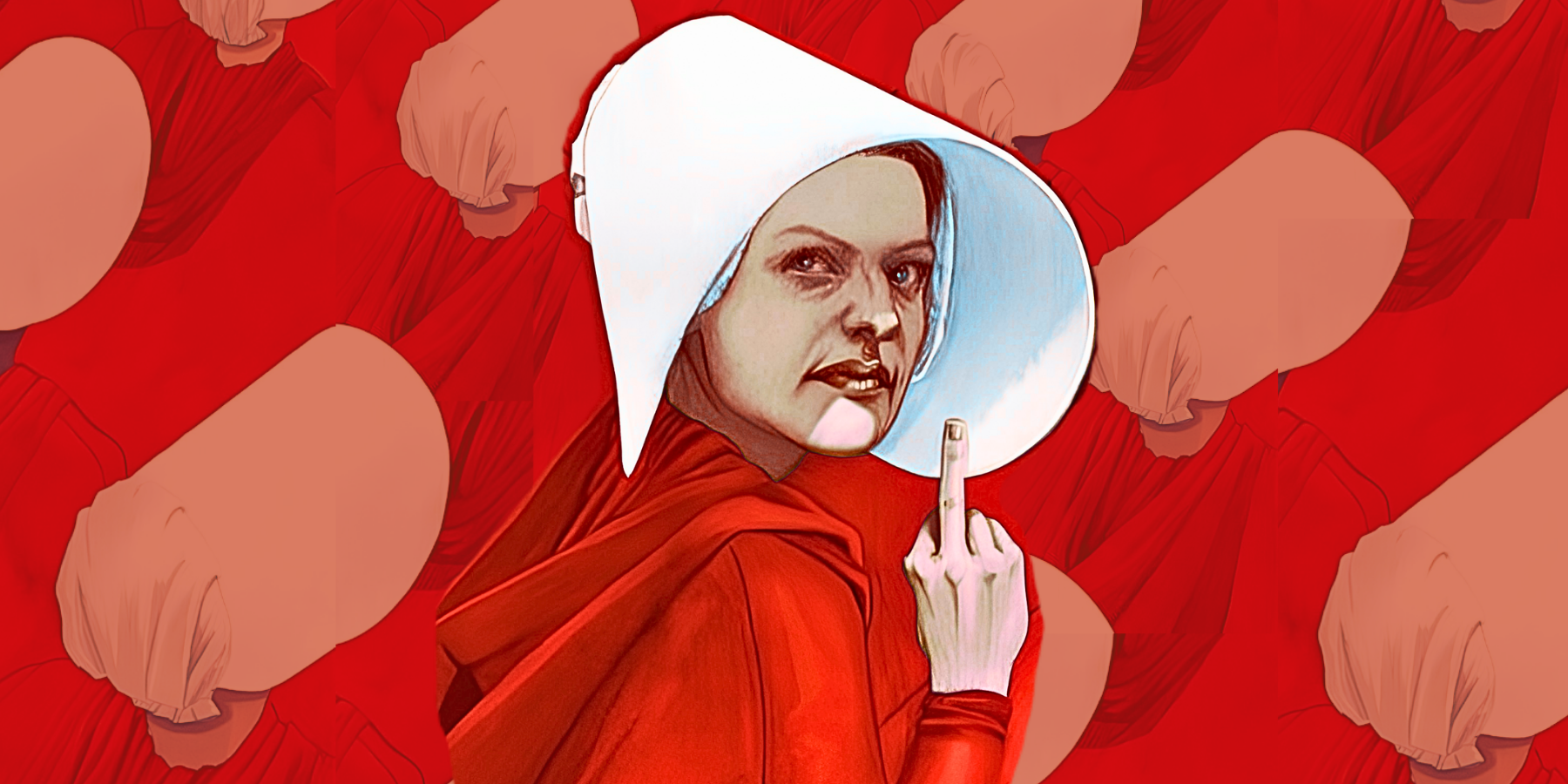
If the Equality Act debate concerns what legal protections women might lose, comments from senior Reform figures raise a different question altogether: what vision of womanhood is to be promoted under their governance? In November 2024, Matt Goodwin, Reform’s Honorary President, called for “young girls and women” to be given a “biological reality” check. Further, during a podcast with Jordan Peterson, a Canadian clinical psychologist and author, Goodwin agreed with Peterson’s claim that universities have become hubs of “politically correct authoritarianism” and “ethos of harm avoidance” because “universities have become dominated by not only women… [but] childless women”. In response, Penny East, the chief executive of the Fawcett Society, said the “idea that we should be telling young girls they have a moral obligation to have children earlier is both dystopian and deeply sexist […] Suggesting early motherhood is a civic duty is truly troubling.” The Guardian has compared Goodwin’s debates to ‘The Handmaid’s Tale’. Placing the blame on young women for increased social accountability, like cancel culture and concerns about freedom of expression, because of women not having children at a younger age and pursuing higher education, is a framing that critics argue is misogynistic. These arguments risk treating women’s bodies as a solution to demographic challenges, rather than recognising women as individuals with the right to determine their own futures.
What adds further weight to these conversations is Reform UK’s 2024 “Our Contract with You”. Under their “Critical reforms needed in the first 100 days”, the restriction on the number of undergraduate places at universities across the UK will be enforced. While this policy is aimed at addressing educational spending, will reducing places for higher education, while arguing that women must have children at a younger age, mean women will have to fight harder or face barriers for a place in higher education? Will women face increasing pressure to conform to this fallacy of ‘biological reality’?
"They think that women have an absolute right to bodily autonomy in this matter. However, I think that, in the case of abortion, that right is qualified by the fact that another body is involved."
| Danny Kruger, MP (Reform)
These debates feed into a wider set of questions about the party's approach to abortion rights. While Reform UK has not formally proposed restricting abortion access, comments by senior figures and candidates have prompted concern among reproductive rights campaigners about the direction of future policy. Firstly, Nigel Farage has argued that the current 24-week abortion limit is “totally out of date”, citing advances in neonatal care. What is concerning here is the focus on medical advances rather than on a woman’s choice. Similarly, Danny Kruger, a Reform MP since 2025, rejected the idea that women possess an “absolute right to bodily autonomy”. For feminist campaigners, this is not simply a technical contribution to the abortion debate; it goes to the heart of whether women are understood as having equal ownership over their own bodies. The fact that such a principle is still being debated at all raises a deeper concern: why, in contemporary Britain, are women’s fundamental rights still being treated as negotiable rather than settled?
Fuller, in their “Abortion is becoming a new front in Reform UK’s culture war”, found that from April 2024 to 2026, references to abortions increased by 40% compared to April 2022 to 2024. With Abortion Rights (AR) also noting that “once something moves…to being debated again, it becomes political…once it’s political, it becomes negotiable”, emphasising that the UK’s abortion law is not based on something permanent, meaning “it can be changed”.
ABORTION IS UNDER ORGANISED ATTACK
Kerry Abel, chair of Abortion Rights UK, also emphasised: “Abortion rights are under organised attack, and anyone who believes in equality, healthcare and freedom must take that threat seriously.” As Reform UK party members strive for Britain not to be ripped apart by equality, it would seem Reform do not see accessible and safe abortions as a necessary security and right for women. With the current state of the US and their abortion laws now in place, which were once believed to be protected and ineradicable, and these discussions becoming increasingly louder in the UK, do women in the UK need to worry?
Viewed individually, these debates concern employment law, healthcare, education and reproductive rights. Viewed together, they suggest a broader disagreement over women’s place in British society: whether women are primarily protected as autonomous citizens or increasingly positioned through the lens of motherhood, family and demographic policy. The Equality Act, higher education and abortion are not the only areas in which women’s rights campaigners have raised concerns. Reform has also opposed strengthening protections for victims of stalking, voted against new offences covering intimate image abuse and stronger anti-spiking measures, pledged to repeal the Online Safety Act, and committed to leaving the European Convention on Human Rights. Individually, each policy invites scrutiny. Collectively, they prompt a larger question: if this is the direction of travel, what place will women occupy in the Britain Reform UK hopes to build? Taken together, Reform UK’s rhetoric on equality, education, and reproductive rights points to a political climate in which women’s rights are increasingly being reframed as conditional rather than fundamental.